
Description
Characteristics of Cocoa Pods:
- Appearance:
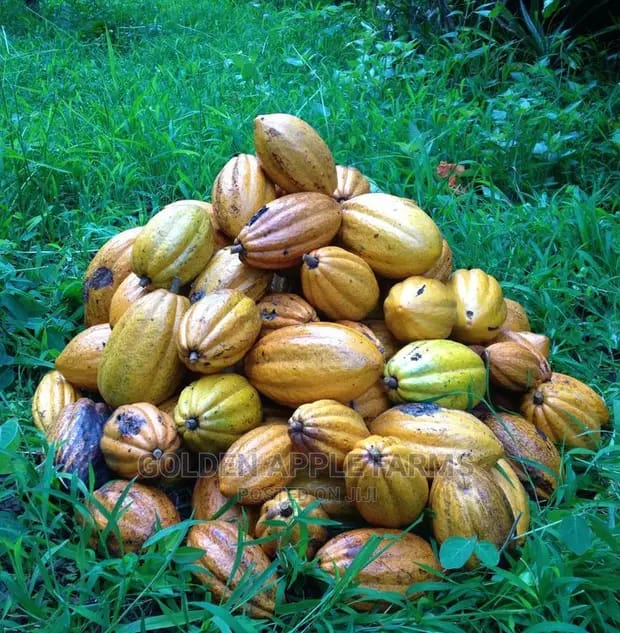
- Cocoa pods are oblong or oval-shaped and can vary in size, typically measuring 15–30 cm in length.
- They have a tough, leathery outer rind with a grooved or warty surface.
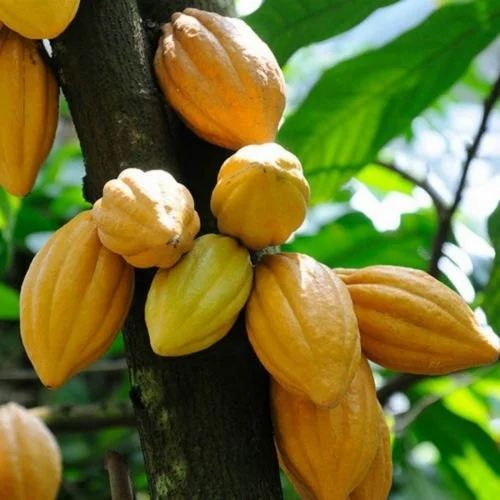
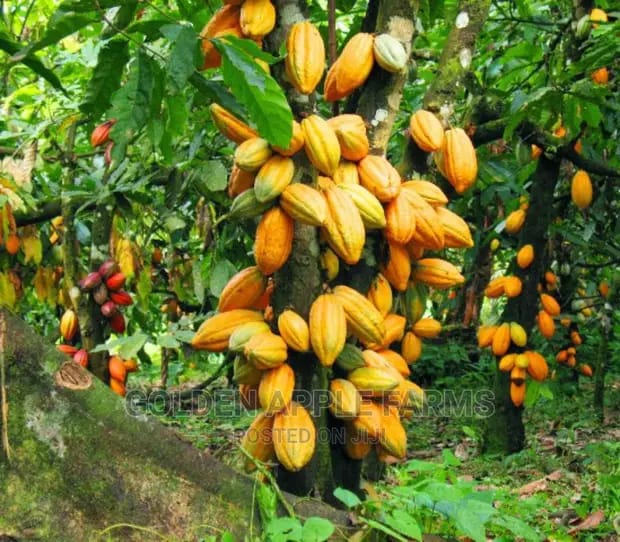
- The pod’s color changes as it matures, transitioning from green or purple to yellow, orange, or red, depending on the variety.
- Structure:
- Outer Husk: The thick, fibrous shell that protects the beans inside.
- Pulp: A white, mucilaginous, and sweet-tasting layer that surrounds the beans and aids in fermentation.
- Beans: Contained in rows within the pulp, a single pod typically holds 20–50 beans.
Growth and Harvest:
- Development: Cocoa pods grow directly on the trunk and larger branches of the tree, a phenomenon known as cauliflory.
- Harvesting: Ripe pods are harvested manually using knives or machetes to avoid damaging the tree. They are then split open to extract the beans and pulp.
Importance of Cocoa Pods:
- Economic Value: The beans within the pod are processed into cocoa powder, cocoa butter, and chocolate, making the cocoa pod a cornerstone of the global confectionery industry.
- Agricultural By-products:
- The husks can be composted or processed into animal feed, biofuel, or organic fertilizers.
- The sweet pulp is sometimes used to make beverages or fermented products.
Cultural and Environmental Significance:
- Cocoa pods and their cultivation play a vital role in the livelihoods of millions of farmers, especially in Africa, Latin America, and Southeast Asia.
- Sustainable cocoa farming practices ensure the preservation of ecosystems and promote biodiversity.
Cocoa pods are an essential component of the chocolate-making journey, linking the agricultural origins of the cocoa tree to the final, beloved products enjoyed worldwide.
Reviews
There are no reviews yet.